Mustard Seed Community Health assists people with healthcare
 Community Foundation of Greater Greensboro
on
November 19, 2025
Community Foundation of Greater Greensboro
on
November 19, 2025
The Bible compares the kingdom of Heaven to a mustard seed. It’s the smallest of seeds, yet when it grows, it becomes the largest of garden plants. That’s why a nonprofit in Guilford County chose the name Mustard Seed Community Health. It hopes to grow from something small to something with a large community impact, and help from a community foundation is making that happen.
“I would have conversations that you need to be eating better, and they’d say, how do I afford that? The way you’re telling me to eat?”
It’s a challenge for “the working poor” — People who work but don’t earn enough to lift them out of poverty. They don’t have insurance or are underinsured and getting sick means making a hard choice.
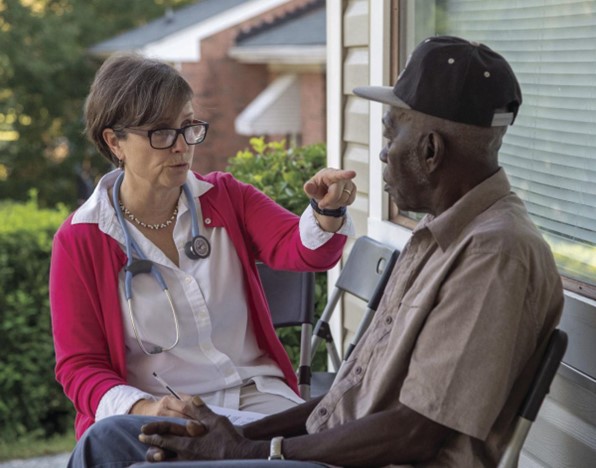
“A lot of them have just neglected their health because they have such little money,” says Christine Ringuette, the Executive Director for Mustard Seed Community Health. “Am I going to go and spend it on medicine, or am I going to get food on my table? So usually taking care of themselves gets pushed off and pushed off and pushed off. When they come to us, they really are overdue for somebody really caring.”
That’s where Mustard Seed Community Health comes in. It offers health care to residents in Guilford County who can’t afford it otherwise.
“Most of our patients are at or below 200% of the poverty level; however, most of them are also employed, but their employer may not offer health insurance, so that’s why we’re needed so that people don’t have the burden of health care debt and go the emergency room if they need help, they can come to us, and we see all ages, from birth to senior citizen.”
The Bible compares the kingdom of Heaven to a mustard seed. It’s the smallest of seeds, yet when it grows, it becomes the largest of garden plants. That’s why a nonprofit in Guilford County chose the name Mustard Seed Community Health. It hopes to grow from something small to something with a large community impact, and help from a community foundation is making that happen.
“I would have conversations that you need to be eating better, and they’d say, how do I afford that? The way you’re telling me to eat?”
It’s a challenge for “the working poor” — People who work but don’t earn enough to lift them out of poverty. They don’t have insurance or are underinsured and getting sick means making a hard choice.
“A lot of them have just neglected their health because they have such little money,” says Christine Ringuette, the Executive Director for Mustard Seed Community Health. “Am I going to go and spend it on medicine, or am I going to get food on my table? So usually taking care of themselves gets pushed off and pushed off and pushed off. When they come to us, they really are overdue for somebody really caring.”
That’s where Mustard Seed Community Health comes in. It offers health care to residents in Guilford County who can’t afford it otherwise.
“Most of our patients are at or below 200% of the poverty level; however, most of them are also employed, but their employer may not offer health insurance, so that’s why we’re needed so that people don’t have the burden of health care debt and go the emergency room if they need help, they can come to us, and we see all ages, from birth to senior citizen.”
Mustard Seed is seeing an increase in demand for its services and needs to grow beyond its small office. A $100,000 grant from the Black Investments in Greensboro Equity Fund will help make expansion possible. The Community Foundation of Greater Greensboro hosts the endowment. Medical Director Dr. Beth Mulberry says it’s an important development to help fill the gap for a lot of families and for Guilford County as a whole.
“I’d like to see the community as a whole be healthy and happy and have the opportunity to live a healthy and happy life,” says Mulberry. “I mean it’s not just the individuals. We’re here in the community we serve, and we want to see the community as a whole have a happy, healthy life.”
Patients at Mustard Seed Community Health are charged on a sliding scale based on the number of people in the home and the household income to keep health care affordable.
- Category: Equity, Give, Grants, In the News, Philanthropy, Stories of Impact